‘Our Future Health’s potential is phenomenal. It’s a huge step forward for health research’
Wellcome is one of the most renowned global charitable foundations in the world. Its mission is to help everyone benefit from science’s potential to improve health and save lives.
The charity goes about its work by supporting research that can transform our understanding of health, wellbeing, and the global health challenges we face today.
That’s why we’re delighted that Wellcome recently became our latest funding charity partner. Over the coming months and years, the charity will provide us with valuable support to help develop our programme. It will also sit on our Founders Board – a crucial part of our governance.
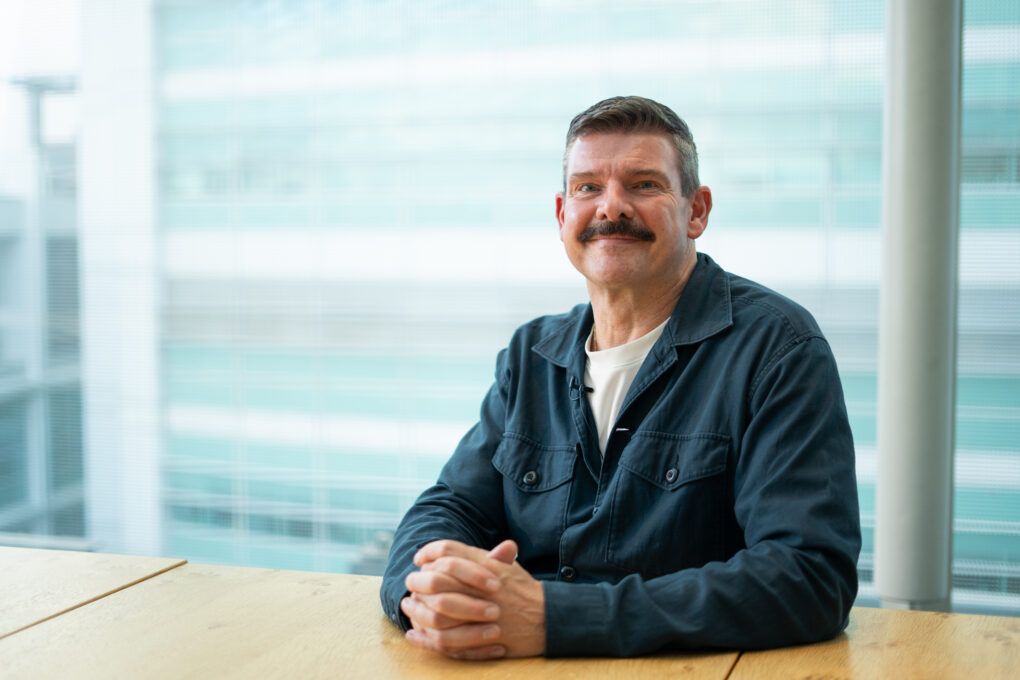
Following the announcement of the partnership, we caught up with Wellcome’s Director of Discovery Research, Michael Dunn. He talked about his impression of Our Future Health, and what our programme could mean for the future of global healthcare.
Discovery and solutions
Michael begins by explaining that Wellcome funds projects through two modes: a ‘discovery mode’ and a ‘solutions mode’.
“Our discovery mode focuses on long-term ambitions,” he says. “It funds research where we don’t necessarily know the destination, such as longitudinal population studies. These are programmes that collect information from participants over a long period of time. In Our Future Health’s case, that means offering researchers the chance to study linkages between things like health status, genetics, lifestyle and environment.
“We know that for some of these studies, it could be 10, 20 or 30 years before the research leads to health impacts. But it’s important we take a long-term view and support them, because it’s cutting-edge research that promises significant benefits in the future.
“In our solutions mode, we support work that’s likely to lead to more rapid health impacts. We focus on three main health challenges: mental health, climate and health, and infectious disease. For example, we recently funded a clinical trial of a new tuberculosis vaccine, as tuberculosis is still a huge killer in the global south.”
For Michael, one of the exciting things about Our Future Health is how our programme brings together both short-term and long-term ambitions.
“By collecting so much health information from so many people, Our Future Health is building the long-term evidence base that researchers need to make bold new discoveries in the future. Then, layered on top of that, the programme is set up to support researchers working to make more rapid changes in the here and now.
“I was delighted to see recently that Our Future Health is starting to invite selected volunteers to take part in additional research run by external researchers. That’s a great example of how we can support researchers to run trials and bring about rapid changes in shorter time periods.
“It will be incredibly useful and galvanising for the health research community.”
A unique resource
Michael also speaks enthusiastically about Our Future Health’s commitment to building a resource that truly reflects the UK population. In the past, some groups – including Black, Asian, and minority ethnic communities – have lacked representation in health research programmes. By prioritising diversity, we can provide researchers with the evidence they need to make discoveries that benefit everyone.
“Our Future Health represents the next big step forward in health research, particularly in terms of the diversity and size of its cohort,” he says. “That’s really unique. Northern Ireland is also a region which tends to be overlooked in these sorts of studies, so I was delighted to see Our Future Health open clinics in my homeland recently. It’s an area with some huge health disparities.
“From Wellcome’s perspective, we want the scientific community to make the most of this incredibly rich data. That means helping different types of researchers to understand the resource and what it can bring to their work.
“Much of the promise of Our Future Health lies in providing scientists who have really good ideas with the evidence base they need. That way, they can do really exciting science that could lead to life-changing discoveries.”
Exceeding expectations
When it comes to the future of healthcare, Michael predicts that we will see increasing focus on early detection and prevention of disease.
“It’s incredibly exciting. And with Our Future Health, because the cohort includes many younger participants, we have a unique opportunity to shine a light on earlier stages in people’s lives – often when the initial disease processes are kicking in.
“Coming from a background of genetics and genomics, I am thrilled by this opportunity to study genetics at a scale that’s never been seen before. One area I could see this having a real impact is on a range of neurodegenerative diseases, where identifying patients early could be key in slowing or preventing the disease.
“Nothing speaks louder than evidence of delivery, and it’s quite extraordinary how Our Future Health has exceeded expectations already. I think this early success provides a partner like Wellcome with a huge amount of confidence that this is a great team, and that the organisation has laid fantastic groundwork across the board.
“At a time when Wellcome is looking to the future and the next big opportunities in health research, there’s very little else in the current global landscape of the same quality, scale and ambition as Our Future Health.
“To me, partnering up was a bit of a no-brainer for us at Wellcome. The potential of this programme is phenomenal.”

Let’s prevent disease together
By volunteering for Our Future Health, you can help health researchers discover new ways to prevent, detect and treat common conditions such as diabetes, cancer, heart disease, stroke and Alzheimer’s.