How access to new ancestry data will help to tackle disease
Our Chief Science Officer, Professor Michael Cook, explains why this data marks a ‘milestone moment’ for health researchers
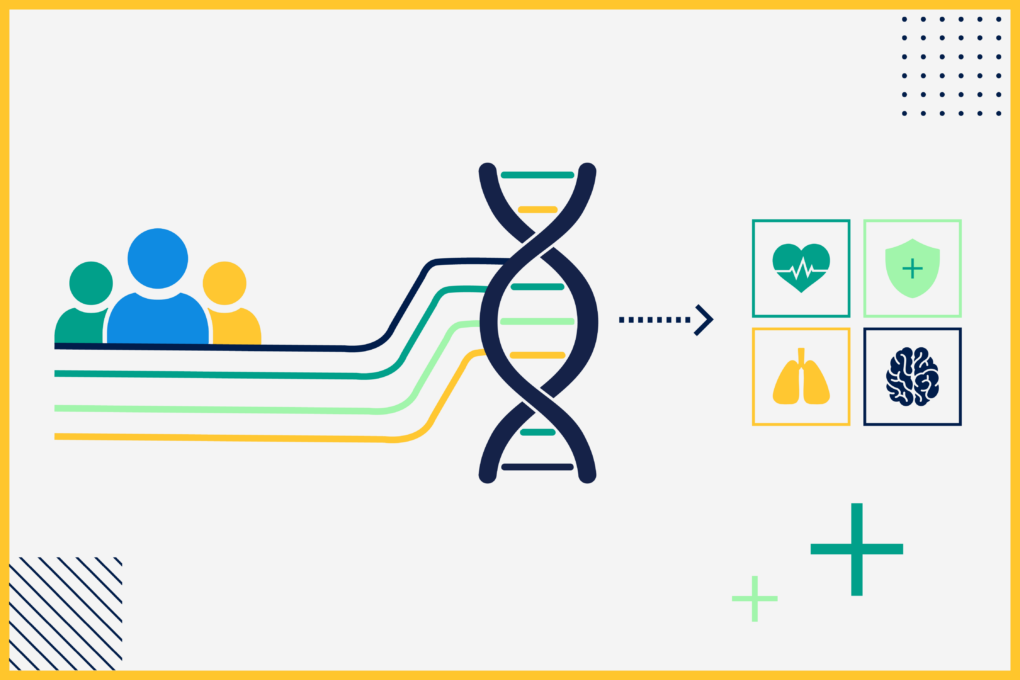
We have made another exciting leap forwards – one that can revolutionise the quality of research with Our Future Health data. For the first time, researchers can now apply to access the genetic ancestry data of 755,000 participants.
Added as part of our latest data release this new resource means Our Future Health has more participants with linked genetic data and ancestry information than any other biobank.
A milestone moment
Having access to this data is a milestone moment for our researchers.
Ancestry data provides a far greater insight into the environmental and lifestyle factors that play into the development of disease. The interplay between genetic ancestry and self-reported ethnicity provides researchers with crucial health information too.
Unlike ethnicity, which has strengths as a socio-cultural assessment, genetic ancestry is an estimation of the geographic ancestral population a participant has descended from.
Importantly, it provides key information in helping us understand how gene variants across the entire genome may be related to health and disease. This gives researchers a much more detailed picture of a participant’s genetic blueprint.
Understanding differences

We already know that people react differently to triggers like inflammation, heat, or pollution. Being able to understand how different genetic foundations are shaped by geographical origins will provide answers to key health questions.
We have a good understanding of some of these genetic differences, such as immunity, lactase persistence (intolerance), malaria resistance, and adaptions to high altitude. But the vast majority remain undiscovered or not really understood.
In addition to expanding our knowledge of such areas, researchers will be able to unravel why certain populations have higher prevalence of key diseases, helping us to understand disease processes and to better identify opportunities to intervene.
The scale of Our Future Health means that researchers can look at participants based on sex, location, geographical deprivation, ethnicity, and now genetic ancestry. It is another layer in understanding the health of the UK’s amazingly diverse population.
Reducing health inequalities
Having this data will, in time, allow us to support research that builds health equitably too.
In the past, large cohort studies have failed to represent the UK population adequately, having recruited predominantly middle class, European ancestral populations.
Our studies have too few participants who are younger or come from rural or more deprived communities or ethnic minorities. You can’t understand health and disease across UK populations if you’re not looking across a fully representative cohort.
It means past treatments and health interventions have tended to focus on a subset of the UK population. Our Future Health is changing this by providing researchers insights into genetic risk across multiple groups, which means we can improve health outcomes across the board.
Scaling up
More than 2 million people have now completed our health and lifestyle questionnaire and 1.6 million have provided blood samples. I can’t overstate how grateful we are to our participants. By taking the extra step of providing a blood sample, they’ve given researchers access to vital data.
We now have 755,000 participants with imputed genotypes on our database. Genotypes are the genetic variants someone carries at specific points in their DNA.
We have used this rich genetic information to impute or infer millions more variants across the genome. This works because nearby genetic variants are often inherited together, so information from one part of the genome can help predict information in another. This greatly increases the amount of genetic information available for research.
As part of our new genetic ancestry offering, our data includes information on kinship, which describes how closely participants are genetically linked and principal components, measures of genetic similarity or difference.
In addition to these researcher-ready datasets, we have also included in our latest data release 190,000 cancer records, as well as the results of 1.2 million lipid profile tests (total, HDL cholesterol, and triglycerides).
Exceptional research tools
For the first time ever, we can look across different populations at the unrivalled scale that Our Future Health offers.
Researchers are now able to explore the complex interactions between lifestyle, environment, and health across a diverse range of ethnicities and ancestral groups.
This information massively upgrades what we can offer our researchers. Without it, they would have to compute this data themselves, which is complex, costly, and time-consuming.
As always though, security is our prime concern, and access to our data is only available to registered researchers with approved studies . You can read about the security measure we take to secure our data here: The 5 principles that keep our volunteers’ data safe – Our Future Health
Find out about approved research studies
Researchers are already using our participants’ data to find new insights into common diseases. You can read more about this in the following features:
Professor Krishnan Bhaskaran: https://ourfuturehealth.org.uk/news/the-insights-we-get-from-our-future-health-will-help-cancer-survivors-live-healthier-lives/
Researcher Hannah Nicholls: Our Future Health will help us better understand the genetics of cardiovascular disease