‘We shouldn’t neglect rare diseases because they’re rare – this is a call to action for us to do more’

Around 7,000 rare diseases have been identified globally, affecting 1 in 10 people worldwide. But, despite their wide-reaching impact, there are still no approved treatments for 95% of these diseases. Such figures point to an urgent need for change. Our Future Health is bringing together up to 5 million people to help make that change.
“Researchers need to study millions of people to understand a handful of rare diseases,” explains Prof Michael Cook, Chief Science Officer at Our Future Health. “We’re building a data set of enthusiastic volunteers who are creating a powerful research tool.
“It means researchers can study unique data to find new ways to detect and treat rare diseases at an earlier stage – and even prevent them from occurring in the first place.”
The rare disease burden
According to the UK Rare Diseases Framework, a rare disease is defined as a condition which affects less than 1 in 2,000 people. In the UK alone, it is estimated that over 3.5 million people will be affected by a rare disease at some point in their lifetime.
“That figure alone proves that we shouldn’t neglect rare diseases just because they’re rare,” says Michael.
“In addition to the physical disease burden, we must also recognise the emotional and mental toll that rare diseases can inflict on patients. They can be hard to diagnose, which means people often live with a condition for a long time without receiving the best from of care.
“They also disproportionately affect children because many rare diseases are genetic. More than 3 out of 10 children with a rare condition die before their 5th birthday.”
Sam Barrell is the Chief Executive Officer of LifeArc, a medical research organisation that conducts and funds pioneering research into rare diseases. “For millions of people living with a rare disease, the reality is often years spent searching for a diagnosis, limited treatment options and a healthcare system that isn’t designed around their needs,” she says.
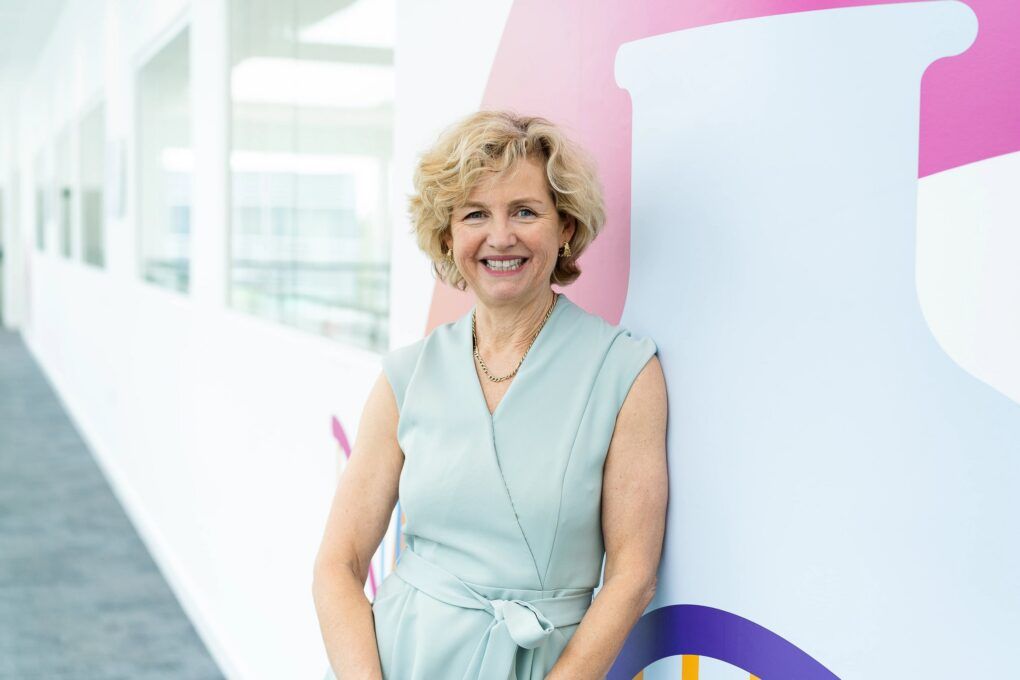
“The cost of this inaction is profound – not only for patients and families, but for society as a whole. Delayed diagnosis and limited treatment options are estimated to cost the UK economy £14.9 billion annually.
“One of the biggest barriers to progress is fragmented health data, which is why initiatives such as Our Future Health are so important. Large-scale data sets have the potential to support faster diagnoses, to identify new treatment targets, and uncover patterns that could make rare diseases easier to detect and treat.
“Behind every rare disease is a person, a family and a future full of potential. At LifeArc, we are working with partners across research, healthcare, and industry to turn promising scientific breakthroughs into life-changing treatments and give more people living with rare diseases hope for the future.”
The future of rare disease research
So, how will Our Future Health make a difference?
“The answer starts with the power of numbers,” says Michael. “With millions of participants statistically we can guarantee that there will be sufficient data for many specific rare diseases from which researchers can gain novel insights from which translational action can spring.
“Importantly, that data includes genetic information. We know that many rare diseases have a genetic component – although we don’t always have the full picture. Researchers can study our volunteer’s data to better understand the genes that contribute towards certain conditions.”
Michael gives the example of alpha-1 antitrypsin deficiency (AATD), a genetically inherited condition that affects around 1 in 3,000 people in the UK. People with AATD lack a chemical in the body that protects the lungs. Consequently, they have a raised risk of lung diseases such as chronic obstructive pulmonary disease (COPD).
There is no current cure for AATD. Treatment focuses on slowing the progression of lung disease or treating the lung condition specifically.
“For a rare inherited condition like AATD, the greatest value of Our Future Health lies in its combination of scale, genetic data and long-term NHS follow-up,” says Dr Samantha Walker, Director of Research and Innovation at Asthma + Lung UK. “It could help uncover undiagnosed cases, explain differences in disease progression, identify new drug targets, and make clinical trials more efficient.
“Ultimately, this could lead to earlier diagnosis, more personalised treatment and better outcomes for people living with alpha‑1 antitrypsin deficiency’.”
Another example of a rare disease with a strong genetic component is Huntington’s disease, a neurodegenerative condition. Northern Scotland has one of the highest recorded rates of Huntington’s disease in the world. In the region, there’s estimated to be 14 cases per 100,000 people – more than 5 times the global average.
It’s an example of a geographical hotspot – and we don’t know exactly why. “Is it linked to ancestral genetics, to environmental exposures that are more common in a particular combination, or to a combination of both?” asks Michael.
“With such a large and diverse sample size, Our Future Health will be a game changer for rare disease research. It will give health researchers a much better chance of answering questions like the one posed by Huntington’s.”

Data that develops over time
Michael says that another big benefit of Our Future Health is that volunteers share their health records, helping researchers to see who goes on to develop a disease and when.
“Many people in a research study like ours will never go on to develop a rare disease. But to understand even a small number of conditions properly, researchers need to begin with a very large group of people and follow them over time.
“That’s especially important for what health researchers call ‘incident cases.’ Incident cases are diseases that aren’t present when someone first joins a research programme like Our Future Health but develop later.”
Let’s say a volunteer consented to join our programme in 2024 and provided a blood sample in the same year. Then, in 2028, they are diagnosed with a rare disease. In the future, researchers could apply to analyse the blood sample to get a clearer view of ‘biomarkers’ – the early biological signals of disease.
The researchers could also ask Our Future Health to invite those volunteers into a new study or trial that they are running, to further enhance our understanding of disease risk, diagnosis, progression and how and when we can intervene.
“In the past, studying biomarkers for rare diseases often meant combining samples from several different research cohorts,” says Michael. “For one study I worked on that was researching a rare cancer called oesophageal adenocarcinoma, I had to bring together samples from 7 separate cohorts just to gather around 300 cases.
“It involved lots of administration – and even then, the samples may have been collected, processed, and stored in very different ways. It created ‘noise’ in the data.
“Our Future Health will make this process far easier. By creating one big, cohesive cohort, researchers will be able to study rare conditions and diseases at greater scale, faster speed, less bureaucracy, and enhanced consistency.”
Hope for rare diseases
For anyone who’s feeling unseen or ignored because they have a rare disease that’s not well understood, Michael shares an optimistic message.
“I believe there’s real hope and value in taking part in Our Future Health,” he says. “Everyone who takes part in our study has something unique to give. By signing up, they are helping to build a resource with the size and diversity needed to facilitate vital research into rare diseases.
“Together, we can create a fuller picture of the UK’s health and help researchers to make discoveries that could help us all to live longer and healthier lives.”