‘This resource has the potential to be transformative for dementia research’
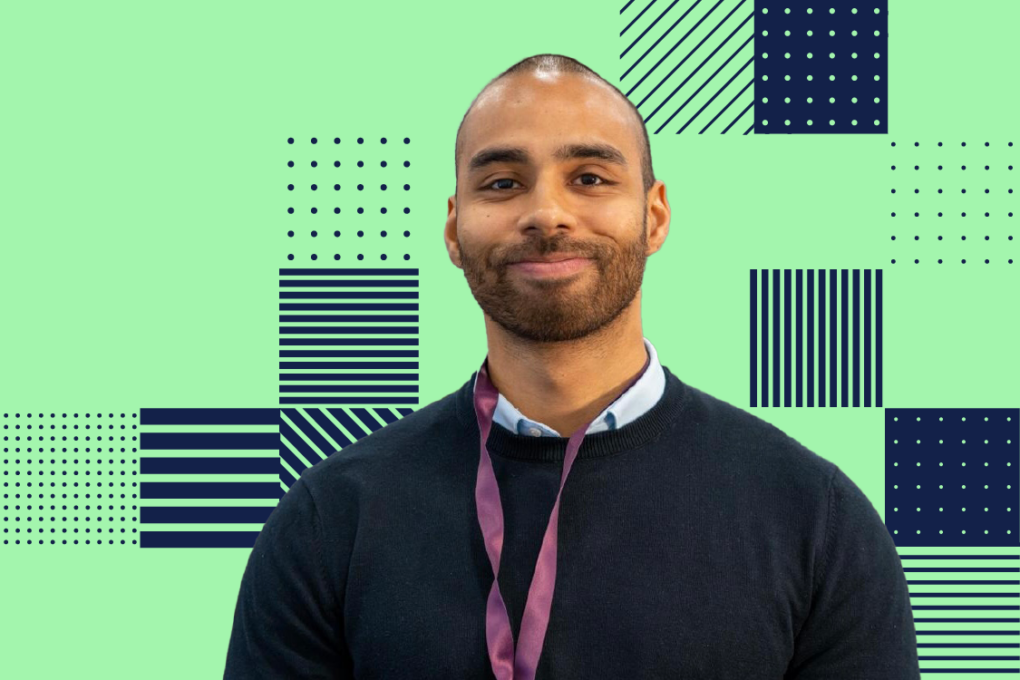
Like so many people around the world, Dr Sasha Philbert has a personal link to dementia.
“My grandmother lived for several years without knowing what type of dementia she had,” he says. “Her condition was labelled as ‘dementia unspecified’, which caused her a great deal of anxiety. The unclear diagnosis made it impossible for her doctors to deliver truly personalised care.”
Sasha is now an Alzheimer’s Society Postdoctoral Fellow at the University of Manchester. His work seeks to improve the way we detect and diagnose dementia so that doctors can deliver more precise care for patients like his grandmother.
“We’re seeing big steps forward in our understanding of dementia, but there’s still so much we don’t know. I believe Our Future Health has the potential to totally change the landscape for researchers in my area. For me and my colleagues, it could be transformative.”
The hunt for new biomarkers
Currently, it’s estimated that 1 million people in the UK live with dementia. That figure is expected to rise to 1.4 million by 2040, as our population grows and ages.
Sasha’s research focuses on Alzheimer’s disease and vascular dementia, the two most common forms of dementia. Alzheimer’s disease is believed to be caused by proteins that build up in the brain, while vascular dementia is caused by reduced blood flow to parts of the brain.
“One of the biggest challenges facing us is that Alzheimer’s disease and vascular dementia can look very similar in their early stages,” explains Sasha. “It leads to a high rate of misdiagnosis – around 30%.
“What we really need is an accurate biomarker that can distinguish between the two conditions early on, so we can offer the healthcare that the patient needs.
A biomarker is something in the body that indicates a process is occurring. Blood pressure and cholesterol levels are both biomarkers. So too is HbA1c, which measures your body’s ability to process sugar and is used to detect signs of diabetes.
“There are several biomarkers for dementia moving through the research pipeline,” says Sasha. “Even if just one of these proves successful, it could have a huge impact on how we diagnose the disease.”
Sasha’s own work currently focuses on sodium as a potential biomarker. “During my PhD, I found elevated levels of sodium in the brains of people with late‑stage vascular dementia – a pattern that wasn’t present in people with late‑stage Alzheimer’s disease. That finding made me wonder whether sodium could be used as a marker to differentiate between the two conditions at earlier stages.
“For my current fellowship, I’ll be using MRI to scan people with early‑stage Alzheimer’s disease and early-stage vascular dementia to see whether the same sodium patterns appear. I’ll also be collecting blood and spinal fluid samples to explore additional biomarkers in the future.”
How Our Future Health can help
Sasha believes Our Future Health will help advance dementia research, for two primary reasons.
Firstly, researchers can apply to analyse our volunteers’ data to search for new biomarkers. “Much of the data we use currently comes from a single moment in time, which is valuable but limited,” says Sasha. “Biology – especially in disease – isn’t static. With Our Future Health, we can track health records over time to see who goes on to develop diseases. That could be a game changer for biomarker research.”
His second reason relates to the research invitations that we can send our volunteers. “It’s incredibly important and it’s something that hasn’t existed at this scale before. It means we can set up trials with efficient recruitment much faster than ever before. For example, I could find participants for a trial related to sodium levels in the brain and track them over time.
“I’m also excited that Our Future Health’s volunteers come from diverse backgrounds. We know that dementias present differently across genetic and ethnic backgrounds, but we don’t yet have the data to explain why. Part of the reason is that, in the past, the people who have enrolled in dementia studies have tended to be white, middle-class and male.
“By using Our Future Health, I could access a broader, more diverse set of participants. That means I could validate my findings across different ethnicities and minority groups, so new discoveries work for everyone.
“The idea of having access to data from up to 5 million people is almost beyond belief. Even if just 10 per cent of a cohort of that size came from minority ethnic backgrounds, it would represent something the research community has never had access to before.”
Hope for the future
Ultimately, says Sasha, there’s still a huge amount to learn about dementia. But he’s optimistic that we’ll see progress in the years ahead.
“I do believe that more effective treatments, and even a cure, will eventually emerge. Whether that will be within my lifetime, I’m not sure. But new breakthroughs, including a recent trial examining whether a finger-prick blood test could be used to help diagnose Alzheimer’s disease, give me hope that the neurological field is moving in the right direction, even if progress takes time.
“Our Future Health has the potential to totally change the landscape for Alzheimer’s disease research, particularly because of its scale and the possibility of inviting its volunteers to take part in new research. That alone sets it apart from anything else currently available to the research community.”
Alzheimer’s Society is an affiliate charity of Our Future Health. To find out more, visit alzheimers.org.uk

Let’s prevent disease together
By volunteering for Our Future Health, you can help health researchers discover new ways to prevent, detect and treat common conditions such as diabetes, cancer, heart disease, stroke and Alzheimer’s.