‘The best scientists are clear about what they want to achieve without being sure of the outcomes’
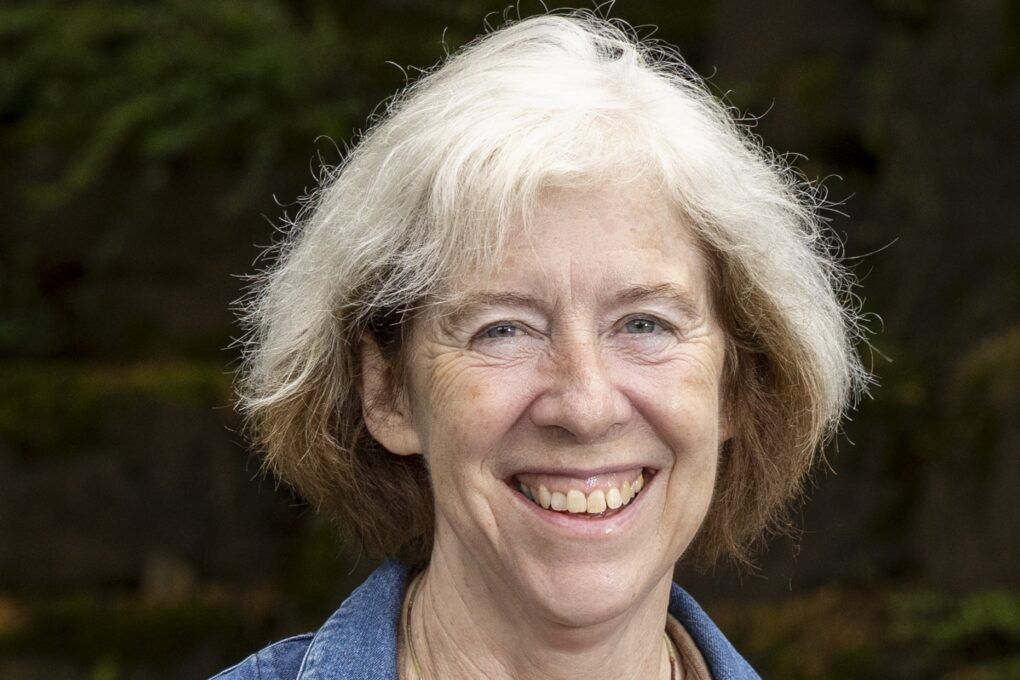
If anyone encapsulates the word ‘possibility’, it is Our Future Health’s outgoing trustee, Professor Fiona Watt.
With an impressive career that includes degrees from Oxford and Cambridge, a stint as Executive Chair of the Medical Research Council (the first woman to have the role), and of course, her trusteeship with Our Future Health, Fiona has a life-long passion for research.
“As a child, I would spend hours poking around in rockpools, trying to figure out how all the tiny marine creatures worked,” she recalls. “I was desperate to be a scientist, but the teachers at my traditional all-girls school refused to let me study biology in favour of physics so I decided to teach myself.
“When I applied to university, my father kept telling me I’d have more job security if I studied medicine, but by then, I’d learned about DNA, and I was hooked on the idea of research, and so I did a degree in cell biology instead.”
Her focus paid off. Today, Fiona is an award-winning stem cell researcher with specialist interests in the skin’s epidermis and cellular activity in skin and mouth cancers. She is also the director of EMBO, an organisation of over 2,000 leading researchers that supports life sciences across Europe and beyond.
Early days of Our Future Health
Fiona’s term as a trustee with Our Future Health finished in July, and she looks back at her involvement in the project, which she joined in 2019 with a sense of exhilaration.
“When I first heard about the concept, my initial response was, ‘Let’s do this!’” she says. “It made total sense to me that examining the DNA of a large cohort of healthy people could really give us vital information about disease.”
But launching a health research project with the scale of Our Future Health came with its challenges.
“From the very start, the ethos was radical and ambitious,” she says. “Aiming to recruit 5 million participants turned it into a large and complicated operation, but we didn’t feel daunted by that, although at times, it was hairy.
“As a scientist, I could explain why a research project like Our Future Health could be ground-breaking in terms of medical science, but pitching to the Treasury was something else. Luckily, we managed to get an initial pilot project grant. Then we got support from health charities and industry partners, which was vital.”
A wonderful vision
If the implementation of such an untested project was by its very nature experimental, Fiona never doubted its ethos.
“Fundamentally, Our Future Health embraces altruism and equality,” she says.
“Most people want to help others, and young adults are particularly altruistic. It’s wonderful to think that by sharing their health data they can help the whole population in years to come.”
Fiona points out that working with such a large cohort of participants means that nobody gets left behind. New treatments or interventions can help all sorts of people.
“The UK is very ethnically diverse, but historically, certain communities have been under-represented in health research,” she explains. “If you want to bring everyone with you, then you need to represent everyone in your studies.”
The power of research
One of her long-standing goals has been building stronger collaborations between researchers and clinicians.
“Good clinical partnerships have always informed my research,” says Fiona, who is currently working on a study to see if a group of cells in the skin could be used to treat severe scarring. “We need to respect and support what clinicians can bring to science and find ways to allow them to contribute.”
She believes good research should include the public too. “I like the fact Our Future Health includes its participants in its decisions and brings them along as equals on this journey.”
But she stresses it’s important not to over-promise, and to temper excitement with pragmatism.
“We can’t say that we’re going to cure cancer – not least because there are so many types of cancer – but being realistic doesn’t mean we can’t be ambitious. After all, the best scientists are clear about what they want to achieve without being sure of the outcomes.”
And as she points out, uncertainty goes hand in hand with research. “A researcher in California recently developed a drug to prolong the life of people with pancreatic cancer,” she says. “Previously most people said it was impossible to make such a drug, but nothing is impossible. It’s just as scientists, we can never know which research avenues are going to pay off.
“In 20 years, thanks to Our Future Health, we could be linking all sorts of variants to disease, and we will have the numbers to do some really effective clinical trials,” she says. “As a scientist, I’m really excited by the possibilities ahead.”