‘If you want the best possible healthcare for you and your loved ones, take part’
It’s just another day at the clinic for Dr Frankie Jackson-Spence as she arrives at Barts Cancer Institute in East London. Here, she’ll spend her time working on clinical trials as well as her PhD, which is focused on improving the quality of life for people with bladder cancer. Outside of clinic hours, she’s also a trained doctor who tackles health misinformation with articles in the national press and on her podcast, Vision of Health.
Frankie will spend the day seeing NHS and clinical trial patients who are being treated for kidney or bladder cancer. At the core of her research work, Frankie is trying to understand why a drug works well for one patient and not another.
“I describe what I do as translational work,” she says. “Patients will be taking part in a clinical trial, and I will do a deep dive. What is it about one patient’s socio-economic background, lifestyle or ethnicity that means they respond to a treatment better than the next person? Can I see a specific protein in the patient’s tumour tissue when we look at it under a microscope that means it responds more effectively to the drug?”
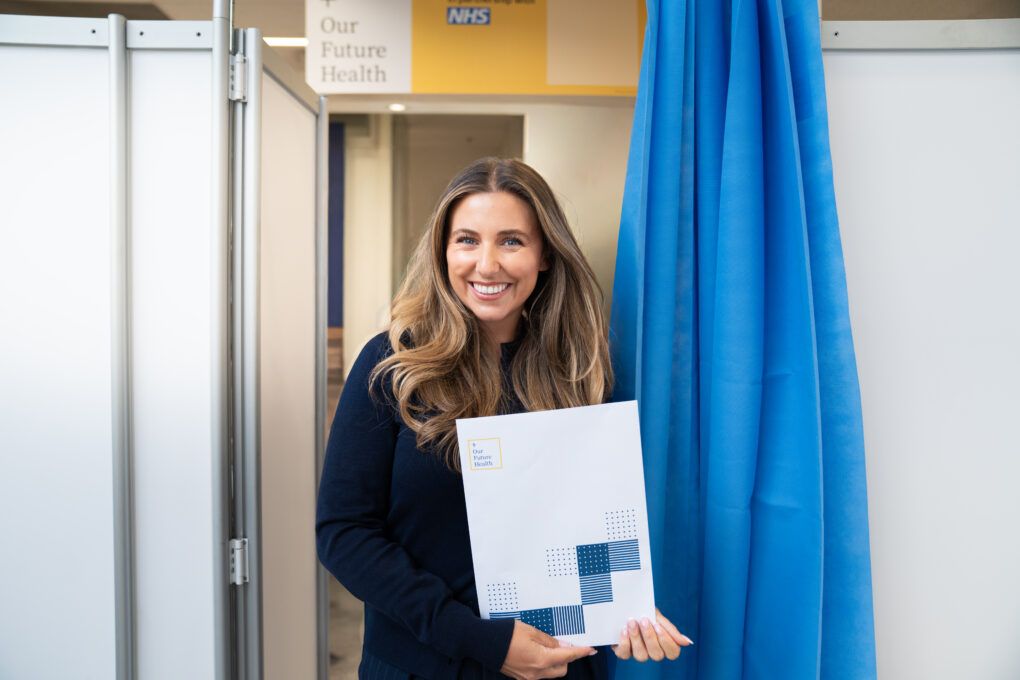
Today, it’s Frankie herself who is taking part in health research, having booked in for an appointment at one of our clinics near to her work. She’s joining because she understands exactly how valuable our resource could be for medical professionals like her.
“When scientists look at the huge amount of information collected by Our Future Health, they’ll be connecting the dots to build a more detailed picture of the nation’s health. Once we have that picture, we can start tailoring treatments to patients and making them more effective. I’m very excited about that.”
Research that tells the whole story
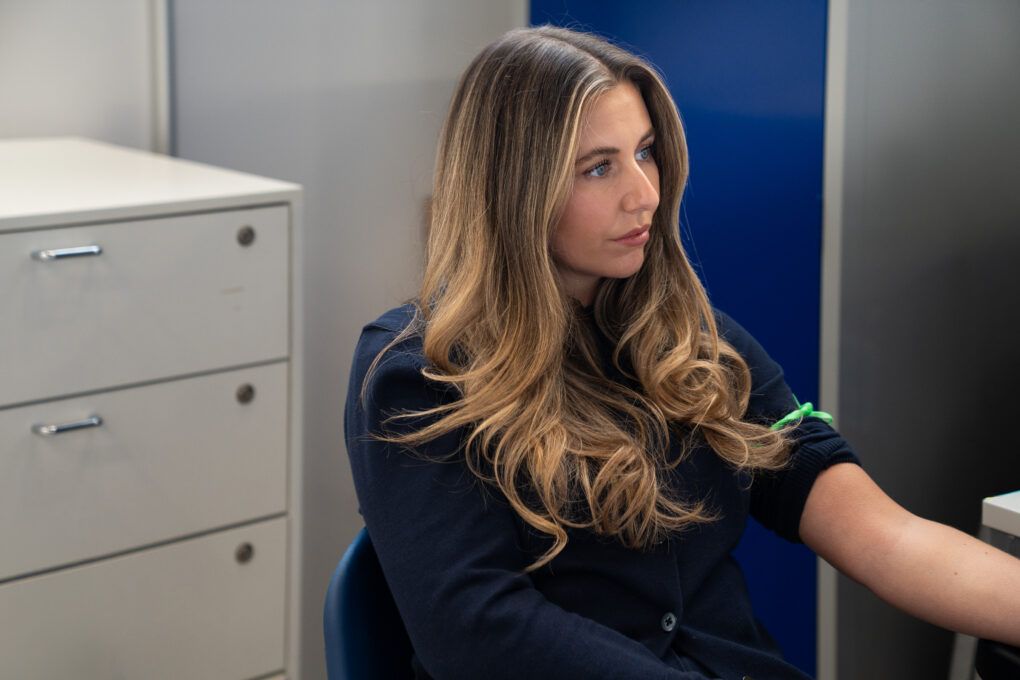
“When I tell people I work in cancer they often say, ‘That must be really depressing’,’’ says Frankie. “But it isn’t at all. There’s a sense of reward that comes with knowing your patient is getting the best drug for them, and often that’s a drug that is only available through a clinical trial.”
In her PhD, Dr Frankie is looking at the amount of chemotherapy given to people with bladder cancer. She focuses on patients’ quality of life during their treatment.
“Historically, we judged the success of a medical intervention or drug treatment on whether patients live longer, but that doesn’t tell the full story. A drug might extend a life expectancy by six months but are they sitting in bed all day with a poor quality of life? Data is exciting for this reason because we can monitor patients in real time and get a more holistic view.”
Through her work, Frankie says she’s witnessed the power of data. The experience drove her decision to join Our Future Health, as she believes our programme will give researchers a resource to work with that’s beyond anything they’ve seen before.
“If Our Future Health reaches their goal of recruiting 5 million volunteers, the data is going to be so valuable and has the potential to drive precision healthcare forward in a big way,” says Frankie. “It will mean that instead of measures for a whole population as standard, we’ll be able to look at peoples’ weight, blood type, blood pressure and genetic make-up, and be able to offer screening for diseases we know they might be susceptible to, and treatment we’re more confident will work.”
More precision medicine
While cancer treatments have improved dramatically over the past 50 years, there’s still a long way to go. Frankie says she wants to see progress made in how we provide precision care and medicine for individual patients.
“My focus is on how I make their treatment experience more positive, with less side effects and fewer clinic visits. With the help of research conducted on Our Future Health’s volunteer data, I hope we get to a point where, if a patient asks me ‘What are the side effects of this drug you’re offering me?’, I can give them more specific answers, tailored to them.
“For example, maybe I could let someone from a certain demographic know that hair loss was more likely, or vomiting. I would love to be able to give people that knowledge so they can make informed choices.”
Improving outlooks
Frankie says a key aim for cancer researchers going forward is improving the way we detect the disease, so patients can receive treatment earlier. “If you catch cancer at stage 1, the health outcomes are far more positive than if you catch it at stage 4.
“That’s why being able to screen certain groups we know are susceptible to certain cancers is so important. We can catch cancer early and treat it. Health research like this will allow us to identify which groups are more prone to which disease.”
Frankie adds that people can live with some cancers for years. For example, some cases of kidney cancer can be controlled with a daily tablet.
“Then the conversation becomes more like someone who has high blood pressure or diabetes,” says Frankie.“It’s a chronic condition, but we can often manage it with treatment for many years. Because of programmes like Our Future Health driving medicine forward, that’s where we’re going with cancer treatment.”
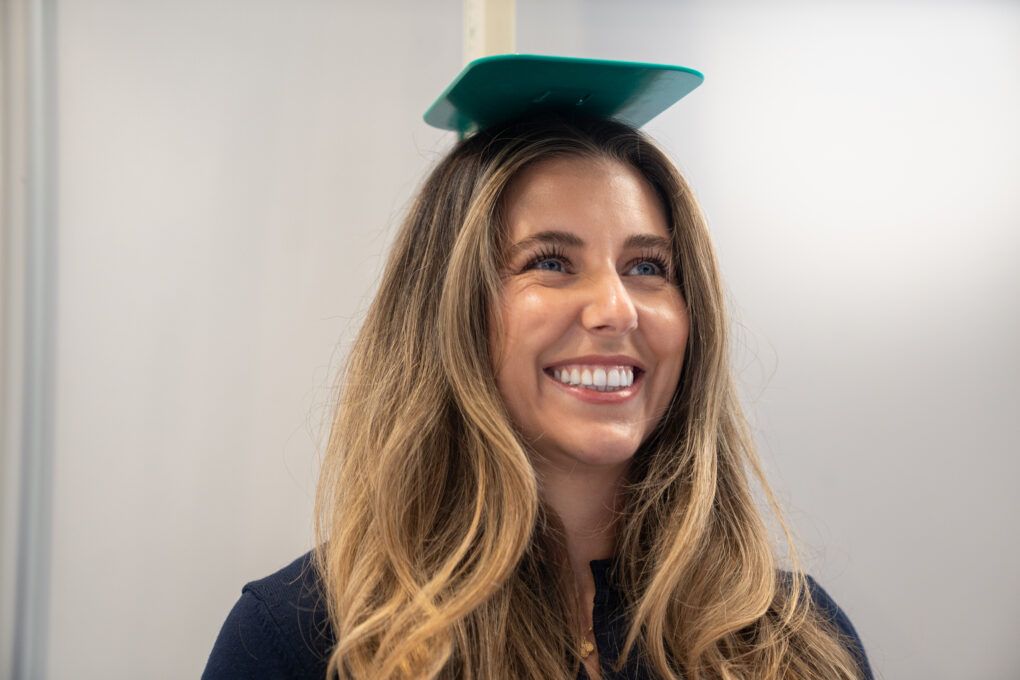
Before heading back to work following her appointment, Frankie takes a moment to emphasise the importance of taking part in programmes like Our Future Health.
“It’s important that if you want better treatment for yourself, your family and your community, you take part in research like this.
“The only way we can improve healthcare is to change things and the only way we can change things is to get more information. And we need everyone to take part to do that.”

Let’s prevent disease together
By volunteering for Our Future Health, you can help health researchers discover new ways to prevent, detect and treat common conditions such as diabetes, cancer, heart disease, stroke and Alzheimer’s.