How our award-winning Experimentation and Insights Team is answering big questions
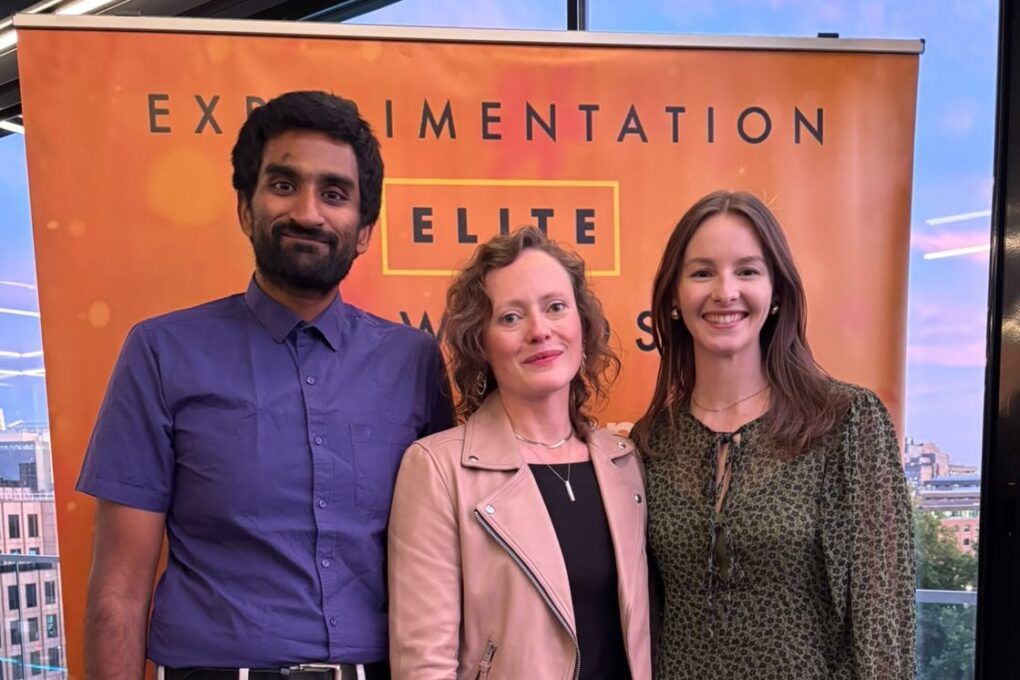
Last month, Our Future Health won in-house team of the year at the Experimentation Elite Awards, a multi-industry awards ceremony.
“It meant a lot,” says Kirstin Purves, our Head of Experimentation and Insights, whose team of 7 beat competition from the likes of IKEA and TUI. “Establishing a research project as ambitious as Our Future Health comes with significant hurdles. We put so much energy into running experiments that help overcome those hurdles, so it’s wonderful to be recognised externally for the work we’re doing.”
Kirstin joined Our Future Health in 2021, before the programme had launched to the public. “It’s an unprecedented programme, so from Day 1 it threw up complex questions that no one has answered before.
“My team’s role is to generate insights that help answer those questions. We work alongside lots of other teams to meet ethical, practical, and technological challenges.”
So far, Kirstin’s team has delivered well over 100 nationwide trials, pilots, surveys, and experiments. Here, she reflects on 3 of the team’s most impactful projects so far.
The invitation question
One of Our Future Health’s first big challenges was how to recruit participants. Between 2022 and 2024, the Experimentation and Insights Team worked closely with Communications and Behavioural Science to test a series of invitation letters, emails, and texts.
“The challenge was not just to increase participation,” explains Kirstin. “We needed to do so in an ethical and trustworthy way, transparently conveying important information that emphasised what it meant to join Our Future Health.”
The project team developed 9 different versions of an invitation letter, with the aim of establishing what messaging worked best. Kirstin then drew up a structured test that saw over 2 million letters sent to different communities, to establish the difference in response rates.
By systematically testing and refining the top performing communication format, the initiative resulted in tens of thousands of new sign-ups.
Since that initial experiment, Kirstin and her team have continued to refine our understanding of how best to send invitations, so everyone has the chance to take part in Our Future Health.
The voucher question
Historically, people from minority ethnic backgrounds, or lower-income households, have not contributed to research. One reason is the financial cost of taking part – for example, the travel fees you might incur by getting to an appointment.
For Kirstin’s team, this led to the question: could a voucher reduce financial barriers to participation without compromising fairness, the financial sustainability of the project or participant trust?
“It was crucially important that people didn’t feel like we were buying their data, or incentivising participation,” says Kirstin. “Our intention was to support people who otherwise couldn’t afford to travel to an appointment and therefore participate fully.”
Kirstin and her team delivered a randomised trial involving 52 appointment delivery sites, 2.1 million invitation letters and more than 80,000 booked appointments. Some recipients were offered a £10 voucher as a thanks for the time and effort of participating, while others were not.
The results spoke for themselves. The voucher increased overall full participation by 38%. There was a 31% rise in people under 40, while the proportion of full participants from deprived communities rose from 32% to 42%. The trial also revealed significant uplifts in full participation from ethnic minorities, particularly Black and Asian people.
Due to the success of the trial, the voucher was rolled out nationally.
“Altruism remained people’s main motivation,” stresses Kirstin. “But by introducing the £10 ‘thank-you’ voucher, we created a more representative and inclusive health research project.”
The clinic question
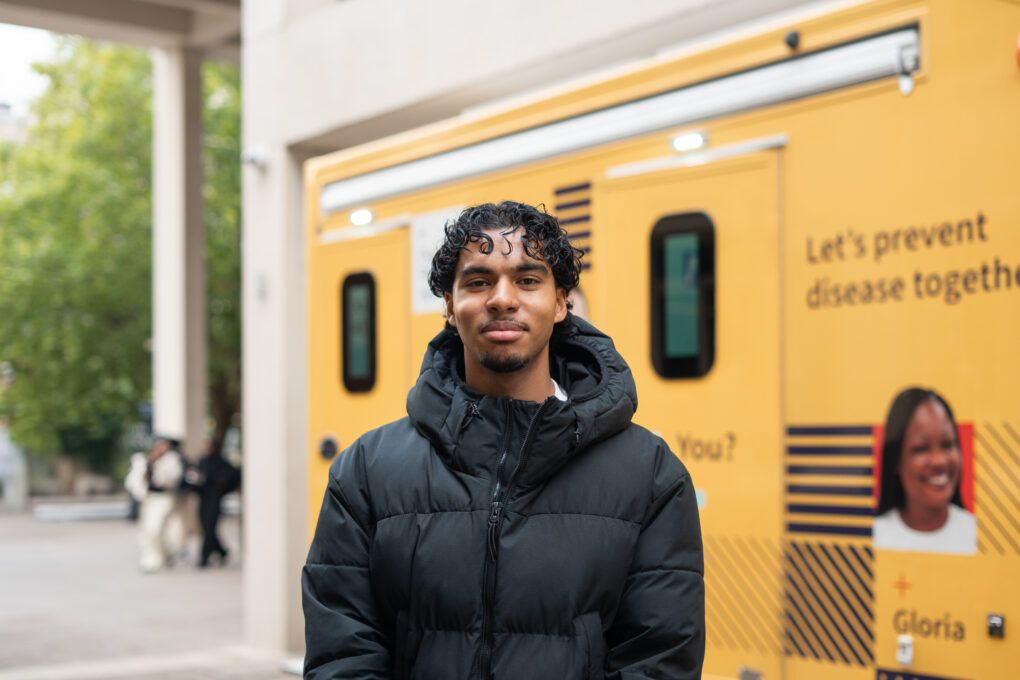
Last year, the Experimentation and Insights Team was at the heart of a project to test whether pop-up clinics would improve participation levels among unrepresented groups. Unlike our previous clinics, walk-ins would offer appointments that didn’t need to be pre-booked.
As an initial proof of concept initiative, we established pop-ups in 9 locations with high footfall and notable socio-demographic diversity. The test revealed that attendees were more than 3 times as likely to come from under-represented ethnic groups than participants recruited through the pre-booked model. There was also a significant rise in full participation from people under 40 and those from deprived communities.
“The idea was to increase the convenience and immediacy of access,” says Kirstin. “Our analysis showed that in terms of ethnicity, walk-ins not only matched representation in the community, but exceeded it.”
Because the initial experiment was so successful, it provided a blueprint for future outreach, and pop-up venues are now being set up at 20 new sites across the country.
What’s next?
The team is currently working on a campaign to measure the effectiveness of community engagement. It is devising ways of evaluating how this impacts participation.
“This really is emblematic of how we work. We have a big question to answer, which takes up our time, and then we’ll move onto the next challenge,” says Kirstin.
“We’re here to support any part of the organisation that has a problem, a question, a stake, or a need.”